Call For A Quote
866-296-3868
866-296-3868
Most people starting a bounce house business assume the regulatory picture looks like any other rental: buy equipment, get insurance, start booking. In a number of states that assumption is wrong, and finding out afterwards is expensive.
Several states classify commercial inflatables as amusement devices — the same broad category as carnival rides — which brings registration, inspection and operator requirements that have nothing to do with ordinary business licensing.
This article explains what that classification means in practice, what inspectors typically look for, why it directly affects your insurance, and what to establish before you buy. For anchoring weights, wind limits and clearance zones, see our commercial inflatable safety and compliance guide.
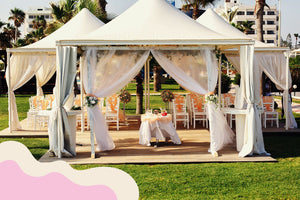
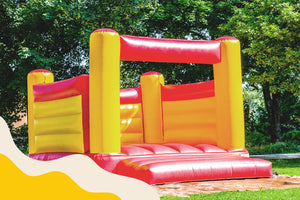
A tent shelters people. An inflatable is equipment that people actively use, at speed, often unsupervised, and usually children. That is a materially different risk, and regulators treat it accordingly.
The consequence is that in some states an inflatable is not simply a product you own — it is a device that may need to be registered, inspected and permitted before it can be operated commercially, sometimes on a recurring annual basis.
There is no national system. Requirements are set state by state and they differ substantially in both content and enforcement.
Broadly, states fall into a few groups. Some operate a formal amusement device programme with registration, scheduled inspection and issued certification. Some require inspection but administer it more loosely. Some regulate only above certain thresholds or only in particular contexts. And some have no state-level regime at all, leaving it entirely to local authorities or to insurers.
New Jersey and Pennsylvania are commonly cited as among the stricter states, to the point that suppliers list “NJ certified” and “PA certified” inflatables as distinct product categories — because equipment intended for those markets must meet requirements that not every unit satisfies.
If you operate in a state with a formal programme, buying an inflatable that cannot be certified there makes it commercially useless to you, however good the unit is.
We are deliberately not publishing a state-by-state table here. These programmes change, thresholds get revised, and a table that is out of date is worse than none — particularly when someone might buy equipment based on it. The method below gets you a current answer for your state.
Start with your state's department of labour, department of agriculture or building and safety authority, depending on how your state assigns it — amusement device regulation sits in surprisingly different departments from state to state. Search for your state name with “amusement ride” or “inflatable amusement device” registration or inspection.
Ask four questions specifically: does the state regulate commercial inflatables, is registration or inspection required before operation, how often must it be renewed, and are there operator training or certification requirements.
Then check locally as well. Some cities and counties impose requirements even where the state does not, particularly for events on public property or in parks.
And ask your insurer. Carriers frequently have requirements of their own that apply regardless of what the state mandates — sometimes stricter.
Even in states with no formal programme, certain clients will ask — and they are frequently your best clients.
Having the documentation ready is often what wins the booking. It is also, for a grand opening or a dealership sale, the difference between an inflatable being approved on the lot and being turned away on the morning.
Where inspection regimes exist, the areas of focus are fairly consistent even though the details differ.
That last item catches operators out. Several regimes expect a documented maintenance history, not merely equipment that happens to be in good condition on the day. Starting a log from your first unit is far easier than reconstructing one later. The setup manuals we publish list the included components for each unit, which is a useful baseline for that log.
This is where the two issues meet, and it is the part worth reading twice.
Many general liability policies exclude inflatables and participant injury unless those exposures are specifically scheduled. An operator can hold a valid, paid-up policy and have no coverage whatsoever for the bounce house that caused a claim, simply because it was never disclosed.
Carriers that do write inflatable exposure frequently ask about certification status, operating procedures and maintenance records as part of underwriting — and a claim adjuster will ask about them afterwards. Operating uncertified equipment in a state that requires certification is the kind of fact that complicates a claim considerably.
Our guide to insurance for party rental businesses covers the exclusion in more detail.
If you operate in a regulated state, establish the requirements before purchasing. Ask any supplier directly whether a unit meets the requirements of your state, what documentation ships with it, and whether the manufacturer plate and serial number are intact and legible.
Ask about the standard the unit was manufactured to, and keep every piece of paperwork that arrives with it. Reconstructing manufacturer documentation for a unit you bought three years ago is difficult and occasionally impossible.
Even where nothing is legally required, the operators who last in this business run as though it were. Anchor to the manufacturer's specification every time. Observe the stated wind limits — inflatables typically carry considerably lower limits than tents, and those figures are specification, not suggestion. Supervise units continuously. Post the rider rules. Inspect before every install. Keep a written log.
Our guides to securing an inflatable, inflatable maintenance and wind action plans cover the practical side.
Tell us which state you operate in and what you are looking at, and we will tell you what documentation ships with the unit so you can check it against your state's requirements before you commit.
Shop commercial inflatables • 866-296-3868 • sales@beyondtent.com • Se habla español.
Important disclaimer. Beyond Tent supplies commercial event equipment. We are not attorneys, regulators, certified amusement device inspectors or insurance advisors.
This article is general educational information reflecting our observations of the event rental industry. It is not legal advice, and it is not a statement of what any state, county or municipality requires of you. We have deliberately not published a state-by-state summary of requirements, because amusement device regulations vary significantly, are administered by different agencies in different states, and change over time.
You are responsible for determining and complying with the registration, inspection, certification and operating requirements that apply where you operate. Verify current requirements directly with the relevant state agency and your local authority, and consult a qualified attorney where you are unsure.
Commercial inflatables present risk of serious injury. Responsibility for safe setup, anchoring, supervision and operation rests with the operator. Beyond Tent accepts no liability for injury, penalties, denied claims or other loss arising from reliance on this article. Last updated: September 2026.
{"one"=>"Select 2 or 3 items to compare", "other"=>"{{ count }} of 3 items selected"}