
A campground has a fixed number of sites and a fixed season. Almost every way to grow revenue comes down to two things: earning more per site, or giving guests a reason to stay when the weather turns. Tents address both.
Beyond Tent supplies commercial-grade tents, canvas bell tents, furniture and equipment to campgrounds, RV parks, resorts and outdoor hospitality operators across the United States, shipping from six US locations.
What parks use tents for
- Glamping accommodation — canvas bell tents on platforms, sold at a rate well above a tent site and often above an RV site
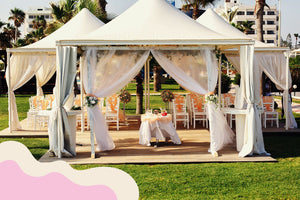
- Pavilion and gathering space, the covered area that lets programming happen regardless of forecast
- Activity and craft areas for family programming
- Group and rally hosting — family reunions, clubs, caravans, which book multiple sites at once
- Seasonal events — live music, holiday weekends, food service
- Registration and camp store overflow at peak arrival times
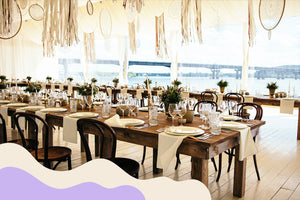
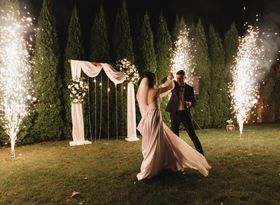
- Wedding and private event hosting, increasingly a major revenue line for parks with the right setting
Glamping — where the revenue actually is
The economics are straightforward. A tent site earns a tent-site rate. The same ground with a furnished canvas bell tent on a deck earns a multiple of it, and books a different customer entirely — people who want to be outdoors without owning equipment.
Our canvas bell tents are the structure most parks use for this. Practical notes before you commit:
- Build a platform. Canvas on bare ground has a short life and a poor guest experience. A deck solves drainage, wear and comfort at once.
- Furnish it properly. The rate premium comes from the bed, the lighting and the finish — not from the canvas. An empty tent is a tent site with extra steps.
- Plan the off-season. Canvas that overwinters wet will not survive. Decide before you buy whether units come down and where they are stored dry.
- Check your zoning and licensing. Some jurisdictions treat glamping units as lodging or as permanent structures, which can bring building code, septic, and occupancy requirements a tent site does not have. Ask before you build.
Pavilion sizing
| Tent | Square feet | Typical use |
|---|---|---|
| 20’x20’ | 400 | Small activity area, registration overflow |
| 20’x40’ | 800 | ~80 seated. Group gatherings, craft space |
| 30’x60’ | 1,800 | ~180 seated. Main pavilion for a mid-size park |
| 40’x60’ | 2,400 | ~240 seated. Rallies, weddings, large programming |
Frame tents are clear-span, which matters for a pavilion where people move around and sightlines to a stage or screen are needed. Sizing the pavilion to your largest realistic group booking — not your average — is usually the right call, because it is the large bookings the pavilion exists to win.
Permits and the long-term structure question
Two separate issues, and parks tend to run into both.
Assembly permitting. A pavilion used for gatherings is public assembly and typically needs a fire permit above roughly 400 square feet, with NFPA 701 documentation. Certificates are available to download. See our permit guide.
The temporary-structure clock. Most jurisdictions limit how long a tent may stand on one site — commonly around 180 days a year. A pavilion or glamping unit left up season after season may be reclassified as a permanent structure, which brings building permits, foundation and accessibility requirements. For a campground planning a season-long install, confirm this with your building department first. It is the most common surprise in this segment.
Equipment
Glamping interiors
Lamps and lanterns, string lights, flooring and furniture. The finish is what justifies the rate.
Pavilion furniture
Picnic tables, folding tables, folding chairs and benches.
Climate
Heating extends your season at both ends, which for a seasonal park is the most direct revenue lever available. Cooling for summer programming.
Family programming
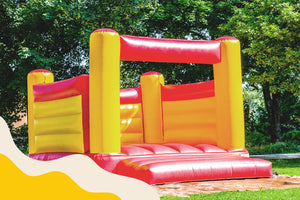
Commercial inflatables, interactive games and concessions. For a park competing on family experience these drive both bookings and on-site spend. See our inflatable safety and compliance guide — several states regulate commercial inflatables as amusement devices.
Weather protection
Sidewalls to enclose a pavilion against wind and rain, which is what keeps a rained-out weekend from becoming refund requests.
Events
Dance floors and staging if you host weddings or live music.
Adding glamping or a pavilion? Tell us your site count, season length and what you are trying to add, and we will help you work out what earns its cost — including whether to start with two glamping units rather than ten.
Financing is available for spreading a capital purchase across a season. See options.
866-296-3868. Se habla español.
Common questions
How many glamping units should we start with?
Fewer than you think. Two to four lets you test your rate, your housekeeping load and your actual demand before committing capital. Housekeeping and turnover are the parts operators underestimate, not the tents.
Can canvas tents stay up all season?
Through a season with proper care, generally yes. Through winter, generally no — snow load and prolonged damp are what destroy canvas. Plan for take-down and dry storage, and confirm your jurisdiction's temporary-structure limit.
Do we need permits for glamping units?
Often yes, and the answer varies widely. Some jurisdictions treat them as camping, others as lodging or permanent structures with building, septic and occupancy implications. Ask your county before you buy, not after.
Will a pavilion handle snow?
Accumulated snow, not wind, is what collapses tents. If you are in snow country you need either a take-down plan or a clearing plan. See wind ratings and snow loads.
Can our own staff install these?
A 20x20 or 20x40 yes, with the right equipment and a few people. A 40x60 needs an experienced crew. Tent jacks substantially reduce the number of hands required.
Talk to us
Call 866-296-3868 — Mon–Fri, 9:00 AM to 6:00 PM EST
Email sales@beyondtent.com
Shop canvas bell tents → • Frame tents →