
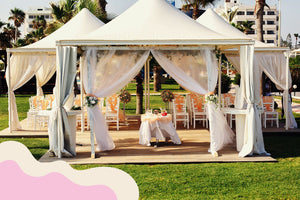
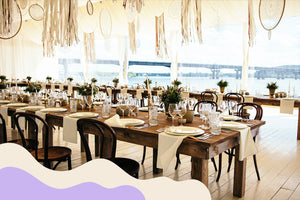
A tent is often the cheapest square footage a church will ever add. When the sanctuary is full, when the fellowship hall can’t hold the whole congregation, or when you want to hold something outside that people who would never walk through the front door might actually attend — a commercial tent solves it for a fraction of what building costs.
Beyond Tent supplies churches across the United States with commercial-grade tents, seating and equipment, shipping from six US locations.
What churches use tents for
- Overflow seating when attendance outgrows the building — particularly Easter, Christmas and special services
- Outdoor worship and revival services, where an open-sided tent lowers the barrier for people who would not enter a building
- Fellowship and meals — potlucks, coffee, after-service gatherings that need shade and rain cover
- Vacation Bible School and youth programmes, where you need shade over a large group of children for a week
- Community outreach — food distribution, back-to-school events, holiday drives
- Building projects, where a tent keeps services running while construction is underway
- Weddings and funerals on church grounds
Sizing for a congregation
Church seating is usually theatre-style rather than banquet, which means you fit substantially more people than a wedding layout in the same footprint.
| Tent | Theatre / worship seating | Seated meal |
|---|---|---|
| 20’x20’ | ~67 | ~40 |
| 20’x40’ | ~133 | ~80 |
| 30’x60’ | ~300 | ~180 |
| 40’x60’ | ~400 | ~240 |
Two practical notes. Leave room for aisles, a platform and any AV — the seating figures above assume the full floor. And frame tents have no centre pole, which matters when everyone needs a clear sightline to the front. Our frame tents are clear-span for exactly this reason.
Permits and fire safety
Most jurisdictions require a permit for tents over 400 square feet used for public assembly — and a church service is public assembly. Your fire marshal will almost certainly ask for proof the fabric is flame resistant.
Every commercial tent we sell is NFPA 701 certified, and you can download the certificate yourself whenever you need it for a permit application. Our guide to tent permit requirements covers what triggers a permit and how to find your local authority.
Occupant load matters too. At 50 or more people you will typically be asked for a floor plan showing exits and seating arrangement.
Equipment beyond the tent
Seating
Folding chairs for flexibility and storage, or stacking chairs where you need to set and clear quickly. Benches work well for outdoor services and store compactly.
Tables
Tables for fellowship meals, welcome desks, registration and outreach events. Round tables suit conversation; long tables suit serving.
Climate control
Heaters extend outdoor ministry into autumn and winter. Fans and evaporative cooling make a summer tent bearable. Both dramatically widen the calendar a tent is usable for.
Sidewalls
Sidewalls turn an open canopy into an enclosed room — useful for weather, wind and for creating a defined worship space. Note that adding walls changes how the tent handles wind, so anchor for the configuration you actually install.
Family and children’s ministry
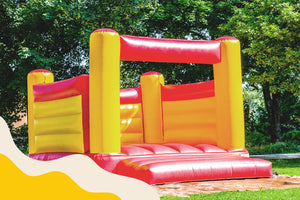
Commercial inflatables and games for VBS, fall festivals and community days. Commercial-grade units are built for repeat use across many seasons rather than a single afternoon.
Buying for a church? Tell us your average attendance, what you are trying to do, and your budget. We will help you work out what actually fits — including when a smaller tent plus sidewalls serves you better than the larger one you were considering.
Financing is available, which many congregations use to spread a capital purchase across a budget year. See options.
Se habla español.
Common questions from churches
Do we need a permit for a tent on church property?
Usually yes for public services. Private property does not exempt a public assembly event, and most jurisdictions set the trigger around 400 square feet. Confirm with your local fire marshal — requirements vary by state, county and city.
Can a tent stay up all season?
Often, but many jurisdictions limit temporary structures to a set number of days per year on one property — commonly 180 days within a 12-month period. Beyond that you may cross into permanent-structure rules. Ask your building department before planning a long-term install.
How long will a tent last with occasional use?
A commercial tent used a handful of times a year, dried before storage and kept out of direct sun, will last many years — considerably longer than one in weekly rental service. The vinyl top is the wear item; the frame outlasts several tops.
Can we get our church name printed on it?
Yes. Custom printing is available on most tent tops. Call for artwork requirements and lead time.
How many volunteers does setup take?
A 20x20 needs two to four people and a few hours. A 30x60 needs a larger crew and a full morning. Frame tent jacks reduce the number of hands needed significantly and are worth having if volunteers are doing the install.
Talk to us
Call 866-296-3868 — Mon–Fri, 9:00 AM to 6:00 PM EST
Email sales@beyondtent.com
Shop commercial tents →