

A tent sale works for a reason that has nothing to do with the tent. It creates a deadline and a destination — something visibly different from the lot people drive past every day. The structure is what makes it look like an event instead of a banner.
Beyond Tent supplies commercial-grade tents and event equipment to dealerships and dealer groups across the United States, shipping from six US locations.
What dealerships use tents for
- Tent sale events — the core use, and the one that justifies buying rather than renting once you run more than a couple a year
- Covered vehicle display, keeping featured inventory clean and shaded through a weekend
- Customer hospitality — seating, refreshments and a place for families to wait while a deal is worked
- Service lane and write-up cover, so customers are not standing in weather at drop-off
- Grand openings and manufacturer events
- Off-site sales at malls, fairgrounds and stadium lots
- Overflow inventory during construction or reflooring
How many vehicles fit
Vehicles need walk-around room and door-opening clearance, so usable capacity is far lower than the raw footprint suggests. These figures assume display, not storage.
| Tent | Square feet | Vehicles on display |
|---|---|---|
| 20’x20’ | 400 | 1–2 |
| 20’x40’ | 800 | 3–4 |
| 30’x40’ | 1,200 | 4–6 |
| 30’x60’ | 1,800 | 7–9 |
| 40’x60’ | 2,400 | 10–12 |
| 40’x100’ | 4,000 | 16–20 |
Pickups and full-size SUVs take meaningfully more room than sedans — work from your actual mix rather than an average.
Clearance — check this before you order
Two heights matter and they are not the same number. Leg height is the clearance at the perimeter where you drive in, and it is the constraint. Peak height is only useful in the centre.
If you are displaying lifted trucks, vans or anything with a roof rack, confirm the leg height will clear the vehicle and the ramp angle getting under it. Call us with your tallest unit and we will tell you what works.
Anchoring on a paved lot
You cannot stake asphalt or concrete, and you almost certainly do not want holes in your lot. That means ballast — weight at every leg, sized to the tent and the wind exposure.
This is not a detail to improvise on the morning of the event. Ballast requirements are substantial, they are inspected separately from the fabric flame certificate, and an under-ballasted tent on an open lot with no wind break is a genuine hazard. See hard-surface anchoring for the specifics.
Dealership lots are typically wide open with nothing to slow wind, which makes a written wind action plan more important here than at a sheltered site.
Permits and municipal rules
Dealership tent sales attract more municipal attention than most tent uses, because many cities regulate them specifically under temporary-use or special-event ordinances — sometimes limiting how many you may hold per year, for how many days, and what signage may accompany them.
- Fire permit for the structure, with NFPA 701 documentation. Certificates are available to download.
- Temporary use permit from planning or zoning — this is the one dealerships most often miss.
- Signage rules, which frequently cover banners and inflatables separately from the tent.
- Parking and circulation, since a tent occupies spaces the site plan may require you to keep.
Check with planning and zoning, not only the fire marshal. Our permit guide covers what triggers a review.
Equipment
Branding
Custom printed tent tops put your name above the lot at a size no banner matches, and they work on every future event. This is usually the cheapest high-visibility signage a dealership can buy.
Sidewalls
Sidewalls for weather, and for closing the structure overnight during a multi-day sale. Clear and window panels keep vehicles visible from the road, which is the entire point.
Lighting and attention
Event lighting for evening hours. Searchlights and special effects for grand openings and launch events.
Customer comfort
Seating, cocktail tables, heaters and cooling. A customer who is comfortable stays long enough to talk numbers.
Family draw
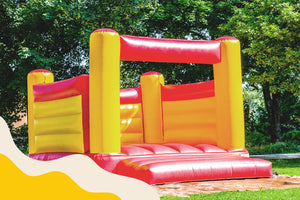
Commercial inflatables and concessions turn a sale into a family outing, which measurably lengthens time on the lot.
Traffic control
Crowd control fencing to define the event area and keep foot traffic away from vehicle movement.
Running more than two tent sales a year? You are likely paying more in rental than a tent costs. Tell us your event frequency and lot dimensions and we will work out whether buying makes sense — and give you a straight answer if it does not.
Dealer groups: ask about multi-store pricing. Financing available. See options.
Se habla español.
Common questions
Will a tent damage our asphalt?
Ballast weights sit on the surface and do not penetrate. Use base plates or pads to spread load, particularly on hot days when asphalt softens and concentrated weight can leave impressions.
How fast can we set up and take down?
A 20x40 goes up with a small crew in a few hours. A 40x60 needs a larger crew and most of a day. If your own staff are installing, factor that labour into whether buying beats renting.
Can we drive vehicles in and out?
Yes, with planning. Confirm leg height clearance for your tallest unit, and lay out legs so there is a clear drive path — work this out on paper before the event, not while a truck is halfway under it.
Can we leave it up between sales?
Check your temporary use permit. Many cities limit the number of days per year a tent may stand on a commercial lot, and leaving it up between events can consume that allowance quickly.
What size should a first-time buyer get?
Most dealerships are best served by a 20x40 or 30x60. Large enough to look like an event, small enough that your own people can install it. Scale up once you know your actual traffic pattern.
Talk to us
Call 866-296-3868 — Mon–Fri, 9:00 AM to 6:00 PM EST
Email sales@beyondtent.com
Shop frame tents →