
Shade at a summer tournament is not an amenity. Heat illness is one of the most common serious problems in youth and amateur sport, and a covered area where athletes can get out of direct sun between matches is part of how facilities manage it.
Beyond Tent supplies commercial-grade tents, seating and cooling equipment to sports complexes, athletic facilities, tournament operators and clubs across the United States, shipping from six US locations.
What facilities and tournament operators use tents for
- Team areas — one canopy per team along a sideline or field complex, the most common tournament configuration
- Spectator shade, which is what parents remember and what drives repeat tournament attendance
- Tournament headquarters — registration, scoring, brackets, officials
- Medical and athletic training, where you need shade, a table and a degree of privacy
- Concessions and merchandise, frequently the margin that makes a tournament profitable
- Sponsor and vendor activations, sold as part of a tournament package
- Equipment and hydration stations distributed across a multi-field site
Sizing for a tournament site
| Use | Typical size | Notes |
|---|---|---|
| Single team area | 10’x10’ or 10’x20’ | Bench, bags, hydration for one roster |
| Tournament HQ | 20’x20’ | Registration, scoring, staff |
| Medical / training | 10’x20’ or 20’x20’ | Table, treatment space, shade |
| Concessions | 20’x20’ or 20’x30’ | Equipment, queue space, service line |
| Spectator shade | 20’x40’ and up | Standing or seated between matches |
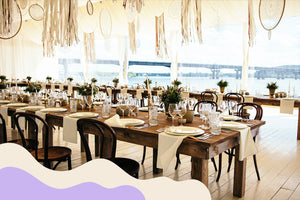
| Banquet / awards | 40’x60’+ | ~240 seated |
Most complexes end up with a mix: several small canopies for teams plus one or two larger structures for HQ and concessions. Buying a fleet of matching 10-foot-wide tents makes a site look organised in a way mismatched consumer canopies never do.
Anchoring — artificial turf is the one to get right
You cannot stake artificial turf. Driving a stake through a synthetic field punctures the backing and can damage the drainage layer and infill beneath it, and repairs are expensive. Most facilities prohibit it outright.
On synthetic surfaces the answer is ballast at every leg, sized for the structure and the exposure. Athletic fields are typically wide open with nothing to break wind, so under-weighting is a real risk rather than a theoretical one. See ballast anchoring for weight requirements.
On natural grass, stakes and straps work normally — but confirm irrigation line locations with your grounds staff first. See staking on grass and gravel.
Every site should have a written wind action plan with a defined take-down threshold. At a tournament with hundreds of families on site, deciding this in advance rather than during a storm cell matters.
Permits and fire
Public assembly thresholds usually start around 400 square feet, so individual team canopies often fall below the line while your HQ and concessions tents do not. A cluster of small tents may still be assessed together — ask rather than assume.
All commercial tents we sell are NFPA 701 certified with certificates available to download. Where food is prepared, expect health department requirements separate from the fire permit. Our permit guide covers state thresholds.
Equipment
Cooling
Fans and evaporative cooling. Shade alone drops perceived temperature substantially; shade plus air movement does considerably more. On a high-heat tournament day this is athlete welfare, not comfort.
Seating
Bleachers for spectators, benches for team areas, folding chairs for officials and staff.
Concessions
Concession equipment — popcorn, snow cones, cotton candy. High margin, and at a youth tournament the queue is continuous.
Site management
Crowd control fencing to define team areas, protect field perimeters and manage spectator flow. Dollies and carts, which matter more than people expect when you are moving equipment across a multi-field complex.
Branding
Custom printed tops with the facility, league or sponsor name. For a complex selling sponsorship, a printed tent is inventory you can sell more than once.
Off-season use
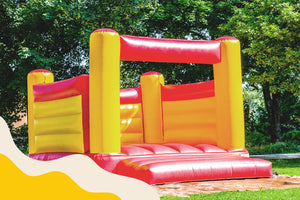
Inflatables and interactive games for camps, family days and fundraisers — a way to earn from the tents outside tournament weekends.
Outfitting a complex or a tournament series? Tell us how many fields, how many teams and your typical event size, and we will help you work out the mix — including how many small canopies you actually need versus one larger structure.
Ask about volume pricing for multi-unit orders. Financing available. See options.
Se habla español.
Common questions
Can we stake into our artificial turf field?
No. Use ballast. Staking synthetic turf damages the backing and drainage and most facilities prohibit it. This is the single most common costly mistake at complexes with synthetic fields.
How many team canopies do we need for a tournament?
Plan one per team on site at a time, not one per registered team — brackets rarely have everyone playing simultaneously. Most operators find they need fewer than the registration list suggests.
Will commercial tents survive weekly tournament use?
Yes, which is the reason to buy commercial rather than consumer canopies. A consumer pop-up gives you a season of hard use; a commercial frame tent gives you many. The frame outlasts several tops.
How fast can we set up and break down?
A 10x10 or 10x20 takes two people a short time. A 20x20 takes a small crew a couple of hours. For a tournament that resets weekly, this labour is a real cost — budget for it.
What about lightning?
A tent is not lightning protection and should never be treated as shelter from it. Your severe weather policy should move people to hard structures or vehicles. Follow your league or sanctioning body's protocol.
Talk to us
Call 866-296-3868 — Mon–Fri, 9:00 AM to 6:00 PM EST
Email sales@beyondtent.com
Shop commercial tents →