
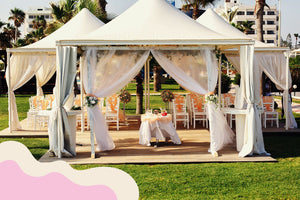
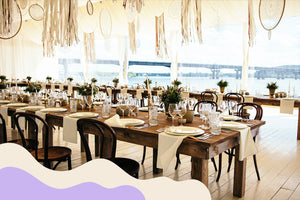
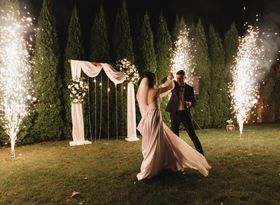
For most wineries, events are the highest-margin thing on the property. Wine is a slow business with a long cash cycle; a wedding pays this month. A tent is usually what makes that revenue possible without building a facility you would only use on weekends.
Beyond Tent supplies commercial-grade tents, flooring and event furniture to wineries, vineyards, cideries and distilleries across the United States, shipping from six US locations.
What wineries use tents for
- Weddings and receptions — the reason most wineries buy, and typically the highest revenue per day the property will ever earn
- Wine club and member events, release parties, vertical tastings
- Harvest and crush events, where the working vineyard is the attraction
- Tasting room overflow on peak weekends without expanding the building
- Crush pad and equipment cover during harvest
- Corporate buyouts and private dinners
- Music, food truck and seasonal programming that brings non-buyers onto the property
Check your zoning before you buy
This is the single most important thing on this page, and it is specific to agricultural properties.
Many wineries sit on agricultural or agricultural-preserve zoning, which frequently limits commercial event activity in ways that do not apply to a regular event venue — a maximum number of events per year, caps on attendance, restrictions on amplified sound, parking requirements, and in some jurisdictions a use permit that must be obtained separately from any building or fire permit.
A tent can also be the thing that changes how a county views your operation. A structure that stands most of the year may be treated as a permanent event facility rather than temporary agricultural infrastructure, which is a different and much harder approval.
Talk to your county planning department before you order. Wineries have bought event equipment they were not permitted to use, and that is an expensive way to learn the rule. Our permit guide covers the fire side; zoning is separate and usually stricter.
Sizing for winery events
| Tent | Seated dinner | With dance floor & bar | Standing tasting |
|---|---|---|---|
| 20’x40’ | ~80 | ~50 | ~100 |
| 30’x60’ | ~180 | ~120 | ~225 |
| 40’x60’ | ~240 | ~170 | ~300 |
| 40’x80’ | ~320 | ~230 | ~400 |
Most winery weddings land between 100 and 200 guests, which puts a 30x60 or 40x60 at the centre of the market. Frame tents are clear-span, which matters for sightlines to a head table and for laying out service through the space.
Siting in and around vines
Drip irrigation
Vineyards are threaded with drip lines and often buried mainline. Do not stake without knowing what is underneath. A stake through a lateral during harvest week is a problem measured in fruit, not repair cost. Involve your vineyard manager in siting before anything is ordered.
Where staking is not acceptable, ballast is the answer — see ballast anchoring for weight requirements.
Row spacing and access
The photograph everyone wants is guests among the vines. The practical version is usually a tent sited on a headland, a crush pad or a level terrace adjacent to the vines rather than within them — you need equipment access, level ground and a footprint that does not cost you fruiting canopy.
Harvest calendar
Your event calendar and your harvest calendar compete for the same ground, the same people and the same equipment access. Site the tent where a September wedding does not block a picking crew.
Equipment
Liners and lighting
Tent liners are the highest-return purchase after the tent for any winery selling weddings — they turn a functional white structure into a room that photographs, and photographs are how the next booking arrives. String lights and event lighting do the same work after dark.
Flooring and dance floors
Event flooring for level footing on sloped or uneven ground, which most vineyard sites are. Dance floors directly affect what you can charge for a wedding.
Sidewalls
Sidewalls for wind and evening temperature drop. Clear and window panels keep the view, which at a winery is most of what the guest is paying for.
Climate
Heating for shoulder season and cool evenings — in most wine regions the temperature swing after sunset is significant and it is what ends an event early. Cooling for summer.
Furniture
Crossback chairs and farm tables suit the aesthetic most winery clients are after. Chiavari-style seating for formal receptions, cocktail tables for tastings, plus linens.
Staging
Portable staging for ceremonies, bands and presentations.
Building an events programme? Tell us your typical guest counts and how many events your permit allows, and we will help you work out the right size — including when a smaller tent with liners and heat earns more than a larger bare one.
Financing is available for spreading a purchase across a season. See options.
866-296-3868. Se habla español.
Common questions
Should we buy or rent?
If your zoning permits more than a handful of events a year, buying usually beats renting quickly — you are replacing a recurring cost. If you are limited to a few events, rent. Our ROI guide shows how to run it.
Can we leave it up through the season?
Check both your fire jurisdiction's temporary-structure limit — commonly around 180 days — and your county's zoning view. On agricultural land the zoning answer is often the binding one.
Can we anchor without damaging vines or irrigation?
Yes, with ballast. Plan for it early; the weights are substantial and are not a setup-morning substitution.
Will a tent handle wind in an open vineyard?
With correct anchoring for the actual configuration, yes. Sidewalls significantly increase wind load. Every property should have a written wind action plan with a defined threshold.
Can we print our label on the tent?
Yes. Custom printing is available on most tent tops.
Talk to us
Call 866-296-3868 — Mon–Fri, 9:00 AM to 6:00 PM EST
Email sales@beyondtent.com
Shop frame tents →