
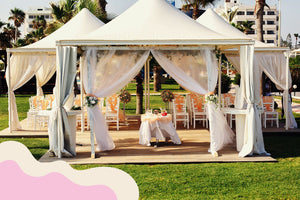
A tent is the fastest way to add bookable capacity to a wedding venue. A barn, vineyard, estate or farm with a lawn can add two hundred covers without planning permission, without construction, and without waiting a year — and a venue that can host outdoors in shoulder season books more weekends than one that cannot.
Beyond Tent supplies wedding venues, barns, vineyards, estates and farms across the United States, shipping from six US locations.
Owning versus renting
Most venues start by having couples rent a tent through a third party. It works, but it costs you three things: control of the calendar, the margin on the rental, and the ability to promise a covered ceremony when the forecast turns.
Owning changes the maths. The tent becomes part of your venue fee rather than a line item on someone else’s invoice, and you decide when it goes up. For a venue running fifteen or more weddings a season, a tent commonly pays for itself inside two seasons — we work through the arithmetic in our fleet ROI guide.
Sizing for a wedding
Wedding capacity is lower than assembly capacity, because you are fitting round tables, chairs, a dance floor, a bar, catering and circulation space.
| Tent | Seated dinner | Ceremony seating | Realistic wedding size |
|---|---|---|---|
| 20’x40’ | ~80 | ~133 | 50–60 with a dance floor |
| 30’x60’ | ~180 | ~300 | 120–140 with floor and bar |
| 40’x60’ | ~240 | ~400 | 160–180 with full layout |
| 40’x100’ | ~400 | ~666 | 280–320 with full layout |
The right-hand column is the number that matters. The seated-dinner figure assumes tables and nothing else. Once you add a dance floor, a bar, a buffet and space for people to move, real capacity drops by roughly a third. Venues that quote the theoretical number end up with unhappy couples.
Frame tents are clear-span with no centre pole, which matters enormously for sightlines during a ceremony and for laying out tables without working around an obstruction.
What makes a tent look like a wedding venue
Tent liners
The single biggest visual upgrade available. Liners hide the frame, soften the light and turn a working structure into something that photographs beautifully. They also intercept condensation before it drips onto linen — a real risk on clear autumn nights and one most venues discover the hard way.
Cathedral window sidewalls
Cathedral window sidewalls are what couples picture when they imagine a tented wedding. They keep weather out while preserving daylight, and they photograph far better than solid walls. If you buy one sidewall type, buy these. Our sidewall guide covers the alternatives.
Flooring and dance floors
Modular flooring makes a wet or uneven lawn usable — and turns a rained-off weekend into a wedding that goes ahead. Dance floors are close to mandatory, and the finish is a genuine style decision.
Seating and tables
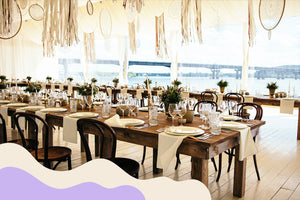
Crossback chairs and chiavari chairs are the two looks couples ask for. Farm tables suit rustic venues; round tables suit traditional layouts.
Lighting and climate
String lights are the cheapest transformation available. Heaters extend your bookable season into spring and autumn, which is where the additional weekends are.
Permits, safety and the practical side
Tents over roughly 400 square feet used for public assembly generally require a permit, and your fire marshal will ask for proof of flame resistance. Every tent we sell is NFPA 701 certified with certificates available to download.
Because a venue installs the same tent repeatedly in the same spot, it is worth establishing your permitting position once with your local authority rather than per event. Our guide to permit requirements covers how.
Two more things venues consistently underestimate: a written wind action plan naming who can stop an event and at what speed (covered here), and accessibility — a beautiful tent reached across soft ground excludes guests, and it is easy to fix at setup (covered here).
Outfitting a venue? Tell us your typical wedding size, your site and your season, and we will help you specify the tent, walls, flooring and seating as a package rather than a list of parts.
Financing available — useful when adding capacity ahead of a booking season. See options.
Sample program. Judge the vinyl and the chair finish before committing. Request samples.
Se habla español.
Questions venues ask us
What size tent for 150 guests?
A 30’x60’ is the usual answer for 150 seated with a dance floor and bar. A 20’x40’ will seat 150 on paper but not once you add everything a wedding actually needs.
Can we leave the tent up all season?
Many venues do, but jurisdictions commonly limit temporary structures to a set number of days per year — often 180 within 12 months. Check with your building department before planning a permanent seasonal install. Note also that constant sun exposure ages a top faster than repeated install-and-strike does.
How long does a wedding tent last?
Manufacturers commonly cite five to ten years for commercial vinyl. Storage practice is the dominant factor — a top dried before storage far outlasts one packed damp. When the fabric wears out you replace the top, not the frame.
Do we need flooring?
Not always, but it is what lets you say yes to a booking after three days of rain. For venues on grass it is frequently the difference between an event going ahead and being cancelled.
Can we print our venue name on it?
Yes — though most wedding venues choose plain white, since couples are picturing their wedding rather than your branding.
Talk to us
Call 866-296-3868 — Mon–Fri, 9:00 AM to 6:00 PM EST
Email sales@beyondtent.com
Shop frame tents →