
Outdoor dining stopped being a temporary measure years ago. For most restaurants and breweries the question is no longer whether to cover the patio, but whether the structure over it is good enough to use twelve months a year.
Beyond Tent supplies commercial-grade tents and furniture to restaurants, breweries, taprooms and food halls across the United States, shipping from six US locations.
What restaurants and breweries actually use tents for
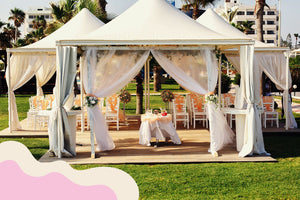
- Permanent-feeling patio cover — the most common use. A frame tent turns weather-dependent seating into seating you can book.
- Beer gardens and taproom overflow, where the tent itself becomes part of the brand and the reason people choose you on a Saturday.
- Winter dining with sidewalls and heaters, which is where the return actually comes from — a covered patio that dies in November pays back half as fast as one that does not.
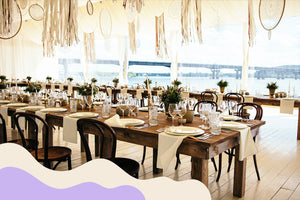
- Private events and buyouts, giving you a room to sell without renovating.
- Live music and weekend programming under cover, so an event does not get cancelled by a forecast.
- Construction and renovation continuity, keeping revenue running while the dining room is closed.
How many covers fit
Restaurant seating is tighter than banquet seating but needs real service aisles. These figures assume mixed two- and four-tops with room for staff to work — not a packed banquet layout.
| Tent | Square feet | Realistic covers |
|---|---|---|
| 20’x20’ | 400 | 20–24 |
| 20’x40’ | 800 | 40–48 |
| 30’x40’ | 1,200 | 60–72 |
| 30’x60’ | 1,800 | 90–108 |
| 40’x60’ | 2,400 | 120–145 |
Add a service station, a host stand or a bar and subtract accordingly. Frame tents have no centre pole, which matters when you are laying out tables and running service lines through the space.
The 180-day question — read this before you buy
This is the single issue that catches restaurants out, and almost nobody mentions it before the sale.
Most jurisdictions classify a tent as a temporary structure only up to a defined number of days on one property — commonly 180 days within a 12-month period, though it varies. Leave it up beyond that and you may cross into permanent-structure rules, which can trigger building permits, foundation requirements, accessibility compliance and a very different inspection.
Some cities relaxed this for outdoor dining and some of those relaxations have since expired. Confirm the current rule with your building department before you plan a year-round install — not after the tent is up.
Our state-by-state permit guide covers what triggers a permit and how to identify your local authority.
Permits, fire and health
A restaurant tent usually attracts three separate reviews:
- Fire. Public assembly over roughly 400 square feet typically needs a permit, and the fire marshal will ask for proof the fabric is flame resistant. Every commercial tent we sell is NFPA 701 certified and you can download the certificate yourself.
- Building. Anchoring, egress, occupant load and the temporary-structure clock above.
- Health. Where food is served or prepared under the tent, your health department may have requirements on flooring, hand-washing and food protection that do not apply indoors. Portable sinks are often what satisfies this.
Heaters and cooking equipment have their own clearance rules. Never use open flame under a tent — flame-resistant is not fireproof.
Equipment that makes it work year round
Sidewalls
Sidewalls are what convert a canopy into a usable room. Clear and window panels keep the view and the light, which matters commercially — a walled-in box does not sell the same as a bright one. Note that adding walls changes how the structure handles wind, so anchor for the configuration you actually install.
Heating and cooling
Heaters are the highest-return accessory a restaurant buys, because they extend the season into the months where a covered patio is a differentiator rather than an expectation. Fans and evaporative cooling do the same at the other end of the calendar.
Flooring
Flooring levels uneven ground, handles drainage and is frequently what a health or accessibility inspector focuses on. It also changes how the space feels from “parking lot with a tent” to a room.
Furniture
Outdoor service is harder on furniture than a dining room. Our restaurant collection covers commercial seating built for it, along with tables, barstools and cocktail tables for standing service.
Lighting
String lights and lamps. Lighting under a tent is not decoration — after sunset it is the difference between a space people want to sit in and one they walk past.
Working out what fits your patio? Send us the dimensions and how you seat, and we will tell you what actually fits — including when a smaller tent with sidewalls and heat beats the larger one you were considering.
Financing is available if you would rather spread the cost across a season instead of a single month. See options.
Se habla español.
Common questions
Can we leave the tent up all year?
Physically yes, with proper anchoring and snow-load consideration. Legally it depends on your jurisdiction's temporary-structure limit. Ask your building department first — this is the question that causes problems, not the tent itself.
Will it hold up to wind and snow?
Depends on the tent, the anchoring and the configuration. Sidewalls significantly increase wind load. In snow country you need a plan to clear the top or take it down — accumulated snow is what collapses tents, not wind. See our guide to wind ratings and snow loads.
Can we anchor on a concrete or asphalt patio?
Yes, using ballast instead of stakes. Weight requirements per leg are substantial and are inspected separately from the fabric certificate. See hard-surface anchoring.
Can we print our logo on it?
Yes. Custom printing is available on most tent tops. For a brewery or a restaurant with street frontage this is often the cheapest signage you will ever buy. Call for artwork requirements and lead time.
How long does a tent top last on a permanent patio install?
A top left up continuously wears faster than one used a few times a year — UV is the main driver. Replacing just the top costs a fraction of a whole tent. See tent top lifespan.
Talk to us
Call 866-296-3868 — Mon–Fri, 9:00 AM to 6:00 PM EST
Email sales@beyondtent.com
Shop frame tents → • Restaurant furniture →